



Start Designing for Free!
By Bliss & Bone
June 2026
The short answer: complement each other instead of matching, dress for your season and location, and choose pieces you already feel confident in. Engagement photo outfits read best when fabrics move with the light, colors stay in a coordinated palette of neutrals and soft tones, and the two of you look like you belong in the same frame without wearing the same thing. Everything below builds on those three ideas, broken down by season, by location, and by how to dress two people at once.
This is the part of engagement-shoot planning couples agonize over most, and for good reason: the wardrobe is the single biggest variable you actually control. The light, the location, and the photographer's eye do a lot of the work, but what you wear in engagement pictures is the decision that's entirely yours. Treat it as a styling problem with a clear set of rules rather than a shopping problem, and it gets much easier.
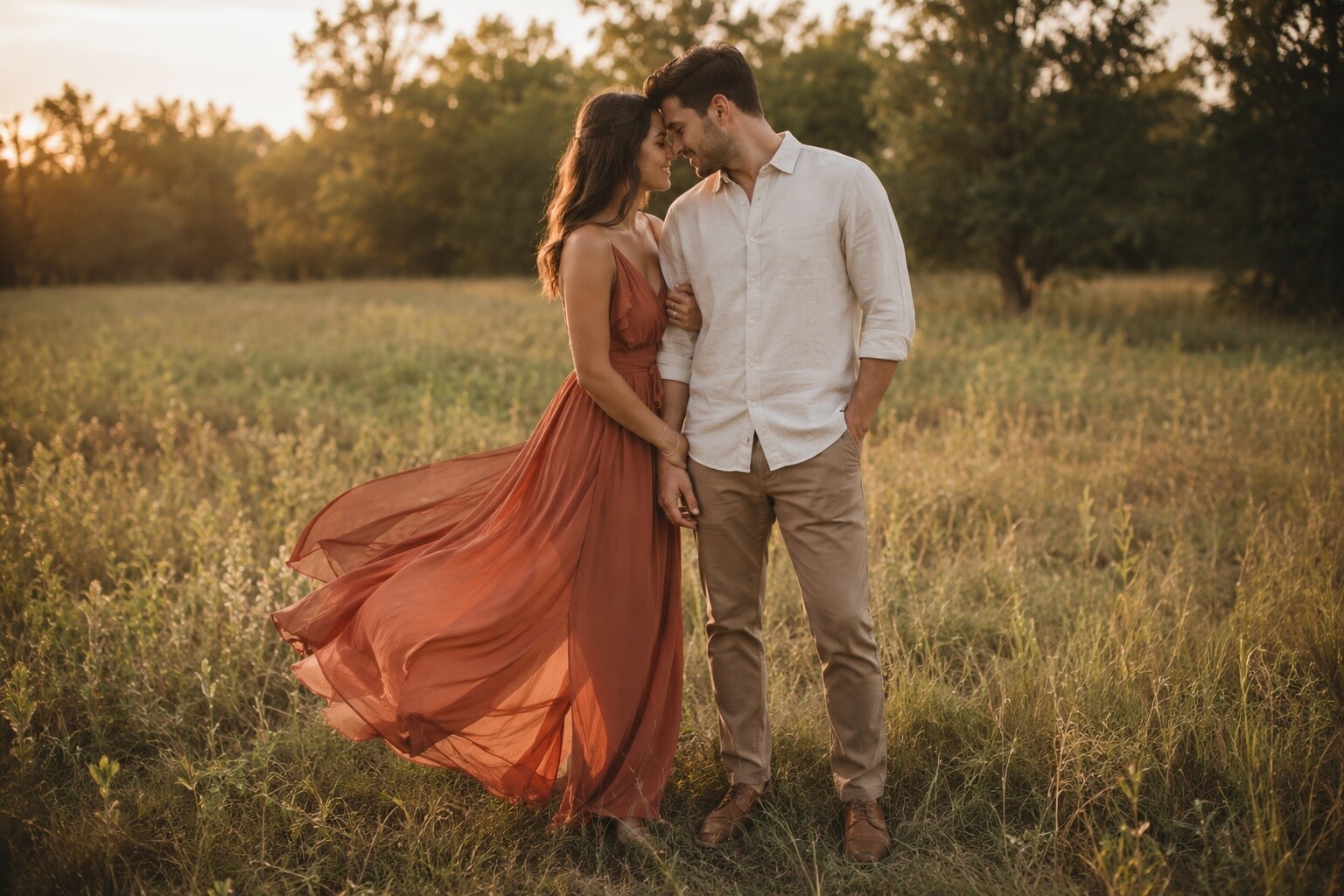
Before any specific outfit, five principles decide whether your engagement photo outfits work on camera. Get these right and almost any combination looks intentional; ignore them and even expensive clothes photograph flat.
Complement, don't match. Coordinating means you share a palette and a level of formality, not a color. Two people in identical chambray shirts read as a uniform, and the eye snags on the sameness instead of resting on your faces. Pull two or three colors that sit near each other on the wheel, then let each person wear a different piece of that range.
Choose neutrals and earth tones over loud prints. Solid, muted colors photograph cleaner than busy patterns, which is why photographers steer couples toward cream, oatmeal, sage, dusty blue, terracotta, charcoal, and soft denim. Bold prints and small repeating patterns can vibrate or "moiré" on a digital sensor, and a single neon piece will throw a colored cast onto the skin nearest it. Pure white and pure black are the two most common mistakes: white tends to blow out in bright sun and carries blue shadows, and black flattens into a void in low light. Ivory, cream, and charcoal solve both.
Dress for the location's movement. A flowing fabric is an asset in an open setting where wind and walking create motion, and a liability on a tight urban street where you want clean structured lines. Match the garment to what the setting will do to it. A chiffon skirt is made for a beach or a field; a tailored blazer and trousers belong against architecture and brick.
Fit and confidence beat hanger-appeal. A dress that looks incredible on the rack but pinches when you sit will read as discomfort in every seated frame, and the camera is unforgiving about that. The outfit you'll relax in is worth more than the one you'll admire and fidget in. Our editorial team's rule of thumb: wear it around the house for an hour first, including sitting, reaching, and walking stairs, and only commit if you forget you have it on.
Coordinate textures, not just colors. When two people wear similar tones, texture is what adds depth and keeps the pairing from looking flat. Pair smooth with structured: a soft knit against a crisp shirt, satin against wool, chiffon against denim. Texture is the detail that makes a coordinated palette look styled rather than accidental.
Season sets your fabric weight, your color range, and how the light will fall, so it's the first filter for any engagement photo outfit. The goal each season is to look like you belong in that light, warm and golden in fall, crisp and bright in winter, fresh in spring, airy in summer.
Fall is the most-photographed engagement season, and the palette does most of the work. Lean into rust, burnt orange, deep olive, mustard, burgundy, camel, and cream, the colors that already live in the autumn landscape. Fabric weight should step up: a knit dress, a long-sleeve midi, or a sweater layered over a collared shirt all read as the season without looking heavy. The classic fall engagement photo outfit is one partner in a flowing rust or olive maxi dress and the other in a cream or oatmeal sweater with warm chinos. Add a textured layer you can take on and off between frames, since golden-hour light drops fast in autumn and a wrap or jacket extends the shoot.
Winter rewards rich, saturated solids and real layers. Think emerald, deep burgundy, charcoal, camel, and ivory, with a wool coat, a chunky knit, or a tailored topcoat as the statement piece. A long coat over a simple dress photographs beautifully against snow because the snow acts like a giant reflector and fills in shadow. Cover your hands smartly, leather gloves or pockets, so cold doesn't read as tension in your posture. Keep skin tones from going blue by avoiding stark white against snow and choosing cream or a warm jewel tone instead.
Spring calls for lighter fabrics and soft, fresh color: blush, sage, butter yellow, dusty blue, lavender, and cream. A flowing midi in a soft floral or a solid pastel suits blooming backdrops, blossom trees, gardens, and green fields just starting to fill in. Pair it with a light knit or an unstructured linen shirt rather than heavy layers. Spring light is bright and even, so it forgives more, but it can be cool, so bring a light layer you can add without breaking the palette.
Summer is about breathable fabrics and keeping cool while still looking pulled together. Linen, cotton, and lightweight chiffon move well in heat and photograph as effortless. Stick to lighter and mid tones, soft white, sand, sky blue, sage, and coral, and avoid heavy synthetics that show sweat and trap heat. Schedule the shoot for the first or last hour of daylight to dodge harsh overhead sun, and choose fabrics with movement so a warm breeze becomes part of the picture instead of a problem.
Location decides silhouette. The same person looks best in opposite outfits depending on whether the setting is open and natural or tight and architectural, so pick your spot before you pick your clothes.
Beach and waterfront: Flowing, lightweight fabrics own this setting. A long chiffon or jersey dress with real movement, a billowing skirt, or loose linen separates all play with the wind and the open horizon. Go soft and tonal: sand, ivory, dusty blue, pale terracotta. Skip anything stiff or structured, which fights the relaxed mood, and skip heels, which disappear into sand.
Urban and architectural: Structure wins against brick, glass, and clean lines. Tailored trousers, a sharp blazer, a fitted midi, or a sleek jumpsuit echo the geometry of the setting. Richer and slightly bolder colors hold up against gray cityscapes, so a deep green, camel, or burgundy reads stronger here than it would in a field. This is the one setting where a more polished, put-together look beats a flowing one.
Field, forest, and mountains: Natural settings want natural texture and earth tones that harmonize with the landscape. Olive, rust, cream, brown, and muted gold sit comfortably against grass, trees, and stone. Flowing fabrics work again here because there's space and wind. Closed-toe shoes or boots are practical and suit the setting, and they save you from balancing barefoot on uneven ground.
At-home and lifestyle: An in-home or backyard session is intimate and relaxed, so the wardrobe should be soft and personal rather than formal. Think elevated loungewear, a knit set, a simple slip dress, an unbuttoned linen shirt over a tee, in cozy neutrals and warm whites. The look is "the best version of a slow morning together," not a black-tie event.
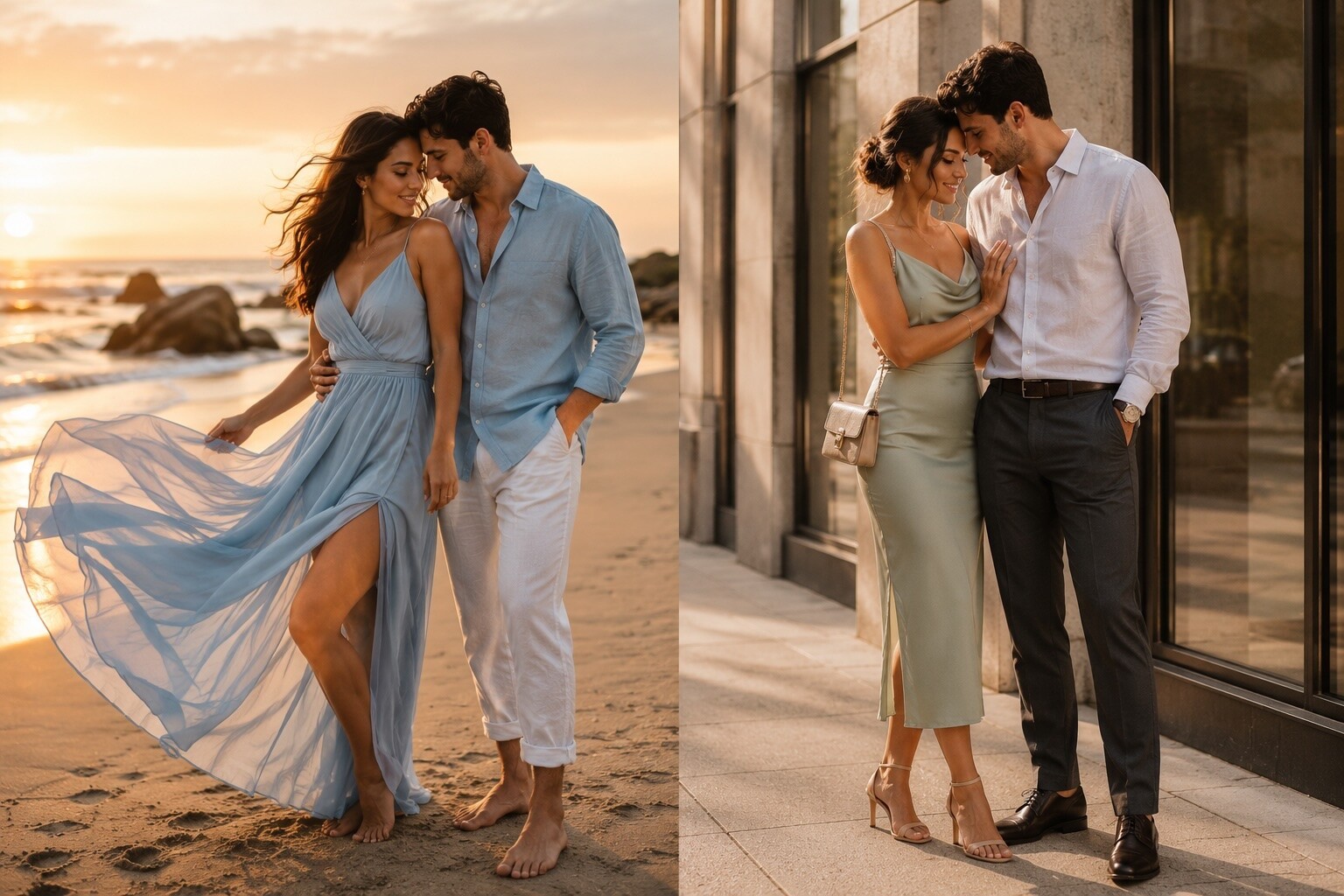
The hardest part of engagement photo outfits is not dressing one person well, it's making two people look like they were styled for the same frame without dressing them as a set. Start with a shared palette of two or three colors plus a neutral, then assign each person different pieces from that range so you echo each other instead of matching. If one partner is in a patterned or statement piece, the other should go solid and supporting, so the frame has one focal point, not two competing ones. Match formality above all: a sundress next to a three-piece suit looks like two different events.
Men's clothes for engagement photos get almost no real guidance online, and that gap shows up in the photos. The reliable formula is a well-fitting layer in a soft neutral over a simple base: a knit sweater, an unstructured blazer, an overshirt, or a crisp button-down in cream, oatmeal, sage, soft blue, or charcoal, paired with chinos or dark denim and clean leather shoes. Fit matters more than the garment, so a five-dollar shirt that fits the shoulders beats an expensive one that bunches. Skip anything brand-new and stiff, especially shoes, which photograph as uncomfortable and look unworn. A small accent that ties to the other partner's palette, a tie, a scarf, a sweater in a shade she's wearing, reads as intentional coordination. "The fastest way to make two outfits look professionally styled is to dress one person and then pull the second person's colors out of the first person's outfit," notes the Bliss & Bone editorial team.
White works for engagement photos when it reads as "soft and romantic" rather than "wedding rehearsal," and the difference is texture, tone, and shape. A white sundress, an eyelet midi, a casual linen dress, or a cream slip with visible texture feels like an engagement, not a ceremony. The look tips bridal when the dress is long, structured, formal, and bright optic-white, the exact cues your wedding gown will carry, which can make the photos feel like a preview you didn't intend. If you want white but worry it's too much, choose ivory or cream over pure white, since true white photographs with blue in the shadows and can blow out in sun, while warmer off-whites stay soft and flattering.
There's also a strategic reason some couples skip white here: if your save-the-dates and your wedding-day looks are already white-forward, a colorful engagement outfit gives your overall wedding imagery contrast instead of three white moments in a row. If white feels like you, wear it with texture and an easy silhouette. If it doesn't, a soft sage, terracotta, dusty blue, or blush gives you the same fresh, photogenic effect without any bridal echo. The white engagement photo dress is a yes, with the caveat that casual and creamy beats formal and bright every time.
A dress that photographs well is built around movement, fit, and how its length works with your setting, not around how it looks on a hanger or a shop model. Three things decide whether an engagement shoot dress reads beautifully on camera: fabric movement, silhouette, and length relative to where you're standing.
Fabric and movement matter most. Chiffon, silk, jersey, and lightweight knits catch light and air, so they create the soft motion that makes engagement pictures feel alive when you walk, twirl, or get caught by a breeze. Stiff, heavy, or shiny synthetic fabrics hold still and can spotlight wrinkles or cling in unflattering ways. If your session is in an open setting, a flowing skirt is one of the highest-impact choices you can make, because the wind does the styling for you.
Silhouette should flatter you when you're moving and seated, not just standing still. A defined waist and a skirt with some volume photograph dynamically; a bodycon shape that's comfortable standing can feel restrictive the moment you sit on a step or lean into your partner. Choose a cut you can move, sit, and walk in, because most of the best engagement frames happen in motion.
Length and setting work together. A floor-length gown is gorgeous on a beach or in a field where the hem can trail and catch wind, but it's impractical on a city street or hiking to a mountain overlook, where a midi gives you the same elegance with room to move. Match the hem to the ground you'll actually be standing on. Across every choice, the test is the same: picture how the dress reads in a photo at that location, in that light, in motion, rather than how it looks standing still in a fitting room. That one shift keeps the focus on styling for the camera and the session.
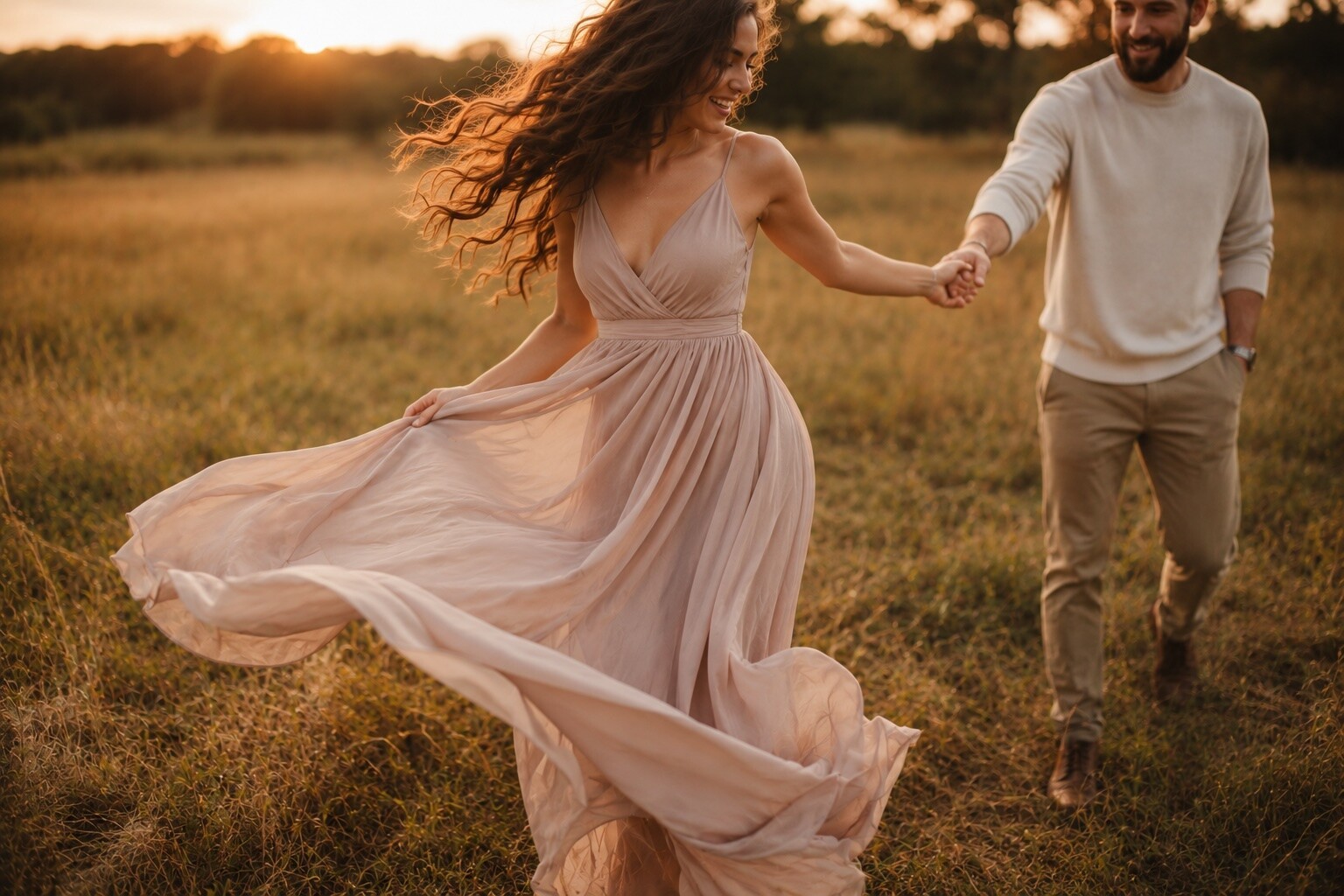
A few choices reliably hurt engagement photos no matter how good the rest of the styling is, and they're easy to avoid once you know them. Skip visible logos and large graphics, which date the photos instantly and pull the eye straight to a brand name. Avoid neon and ultra-bright colors, which throw a colored cast onto your skin and dominate the frame. Don't wear anything ultra-trendy or of-the-moment, because a micro-trend that feels current now will read as a time stamp in a few years, and these are photos you'll display for decades.
Brand-new shoes are a quiet mistake: stiff, unworn footwear changes how you stand and walk, and that discomfort shows in your posture, so break them in first or wear something you already love. Steer clear of matching head-to-toe with your partner, which crosses from coordinated into costume. And resist busy patterns, especially tight stripes and small checks, which can shimmer or distort on a digital sensor. When in doubt, simpler and more solid almost always photographs better than louder and busier.
Wear coordinated outfits in a palette of neutrals and soft tones, in fabrics that move with the light, chosen for your season and location. Complement each other rather than matching, prioritize pieces you feel confident and comfortable in, and bring two complete looks, one dressier and one casual, for variety. The single best test is whether you'd happily wear it for a few hours without adjusting it.
Soft, muted, and earthy colors photograph best: cream, oatmeal, sage, dusty blue, terracotta, blush, camel, and charcoal. These tones keep attention on your faces and coordinate easily between two people. Avoid neon and ultra-bright colors, which cast colored light onto skin, and be cautious with pure white and pure black, which can blow out or flatten depending on the light.
No, coordinate instead of match. Identical outfits read as a uniform and pull the eye to the sameness rather than to you. Share a palette and a level of formality, then have each person wear different pieces within that range, mixing textures so the pairing looks styled rather than accidental.
Yes, white works when it reads casual and soft rather than formal and bridal. A white sundress, eyelet midi, or textured cream slip feels like an engagement; a long, structured, bright-white gown can look like a wedding preview. Choose ivory or cream over pure white, since true white photographs with blue shadows and can blow out in sunlight.
A well-fitting layer in a soft neutral over a simple base: a knit sweater, unstructured blazer, overshirt, or button-down in cream, oatmeal, sage, soft blue, or charcoal, with chinos or dark denim and clean leather shoes. Fit matters more than the brand, so prioritize a shirt that sits well on the shoulders. Avoid brand-new stiff shoes and pull one accent color from your partner's outfit for easy coordination.
Bring two complete looks. One dressier and one more casual gives you visual variety across the session without eating shoot time on long outfit changes. Keep both in the same coordinated palette so the full gallery feels cohesive, and pack each look fully, including shoes and any layers.
Skip visible logos and large graphics, neon and ultra-bright colors, ultra-trendy pieces that will date the photos, and brand-new shoes that change how you stand. Avoid matching head-to-toe with your partner and busy small patterns like tight stripes or checks, which can shimmer on camera. When unsure, simpler and more solid photographs better than louder and busier.
Lean into autumn tones, rust, burnt orange, olive, mustard, burgundy, camel, and cream, in heavier fabrics like knits and long sleeves. A flowing rust or olive maxi dress paired with a cream or oatmeal sweater and warm chinos is the classic fall pairing. Bring a textured layer you can add or remove, since autumn golden-hour light drops fast.