



Start Designing for Free!
By Bliss & Bone
February 2026
Wedding invitation etiquette is a set of established conventions that guide what goes on an invitation, how it's addressed, when it goes out, and how guests are expected to respond. Most of the rules exist for the same reason: to make sure every guest feels clearly and respectfully invited. This guide covers the core etiquette rules couples run into most: what to include, how to handle plus-ones and children, RSVP expectations, and what never belongs on an invitation.
For detailed guidance on timing, see the full guide to when to send wedding invitations. For wording examples across every host-line scenario, see wedding invitation wording.
Every wedding invitation, regardless of format or formality level, needs five elements: the couple's full names, the ceremony date and start time, the venue name and full address, reception details (if different from the ceremony), and RSVP instructions. Those five things are non-negotiable.
Dress code belongs on the invitation if you're requiring one. Keep it to two words ("Black Tie," "Cocktail Attire," "Casual Chic"), placed at the bottom right corner of the card. Anything longer signals insecurity about the rule; two words signals confidence.
If you have a wedding website, include the URL. The invitation handles the essential logistics. The website handles everything else: hotel blocks, travel details, registry, parking, and day-of schedule. Directing guests to your website keeps the invitation clean without omitting anything they'll need.
Registry information does not belong on a wedding invitation — not a mention, not a QR code, not a link. The invitation is a request for someone's presence, and including registry information shifts the implied message from "we want you there" to "we expect a gift." Direct guests to your wedding website for registry details.
Accommodation and travel information also belong on the website, not the card. Including hotel block details on the invitation makes it feel like a travel brochure and typically forces you to break the hierarchy of the suite (outer envelope, inner envelope, invitation card, reception card, RSVP card) to add another enclosure.
Children's attendance is never communicated through a note. Phrases like "adults only, please" or "no children" have no place on a formal invitation. The correct method is addressing: if children are invited, include their names on the inner envelope. If they're not, address the envelope to the parents only. The addressing communicates the guest list without requiring an instruction.
For plus-one guests, send a single invitation addressed to the person you're inviting. If you know the name of their partner, include it on the envelope. If you don't know the name, or if the relationship is new, simply write "and Guest" after your guest's name. This makes the allowance clear without requiring you to track down a name you may not know.
Children aged 18 and older receive their own invitation, even if they still live at the same address as their parents. This is one of the most commonly overlooked rules, and it matters: receiving a separate invitation signals that you're being recognized as an adult guest, not an afterthought on your parents' envelope.
For guests with different last names (unmarried couples, a wife who kept her maiden name, or a household with multiple adults), list each person's full name on a separate line. The convention of "Mr. and Mrs. James Anderson" applies only when both partners share the same last name. When names differ, use "Ms. Elena Vasquez" and "Mr. James Anderson" on separate lines. Never assume a shared name; confirm it.
Name etiquette for formal invitations uses full titles: Mr., Mrs., Ms., or Dr. Abbreviate nothing else: spell out street names, state names, and "Apartment." For informal invitations, first names are widely accepted on both envelopes. When you're unsure of a guest's preferred title or pronouns, omit the title entirely and use their full name. This is broadly accepted and avoids the risk of getting it wrong.
Set the RSVP deadline three to four weeks before the wedding date. This gives you enough time to finalize the headcount with your caterer and venue while giving guests a reasonable window after receiving the invitation. For destination weddings, move the deadline to four to six weeks out.
If you're including a printed reply card, it must be pre-stamped. Guests should never have to purchase a stamp to respond to your wedding. This rule has no exceptions at any price point or formality level.
Make the response method obvious. If you're using a wedding website to collect RSVPs, include the full URL on the invitation or reply card, not just the domain root. An online wedding invitation with built-in RSVP collection eliminates the reply card entirely, automatically tracking responses, dietary restrictions, and plus-one names in one place.
Collect dietary restrictions and plus-one names through the RSVP process, not by following up with guests individually afterward. Build those fields into your RSVP form from the start. For guidance on handling guests who don't respond by the deadline, see how to remind guests to RSVP.
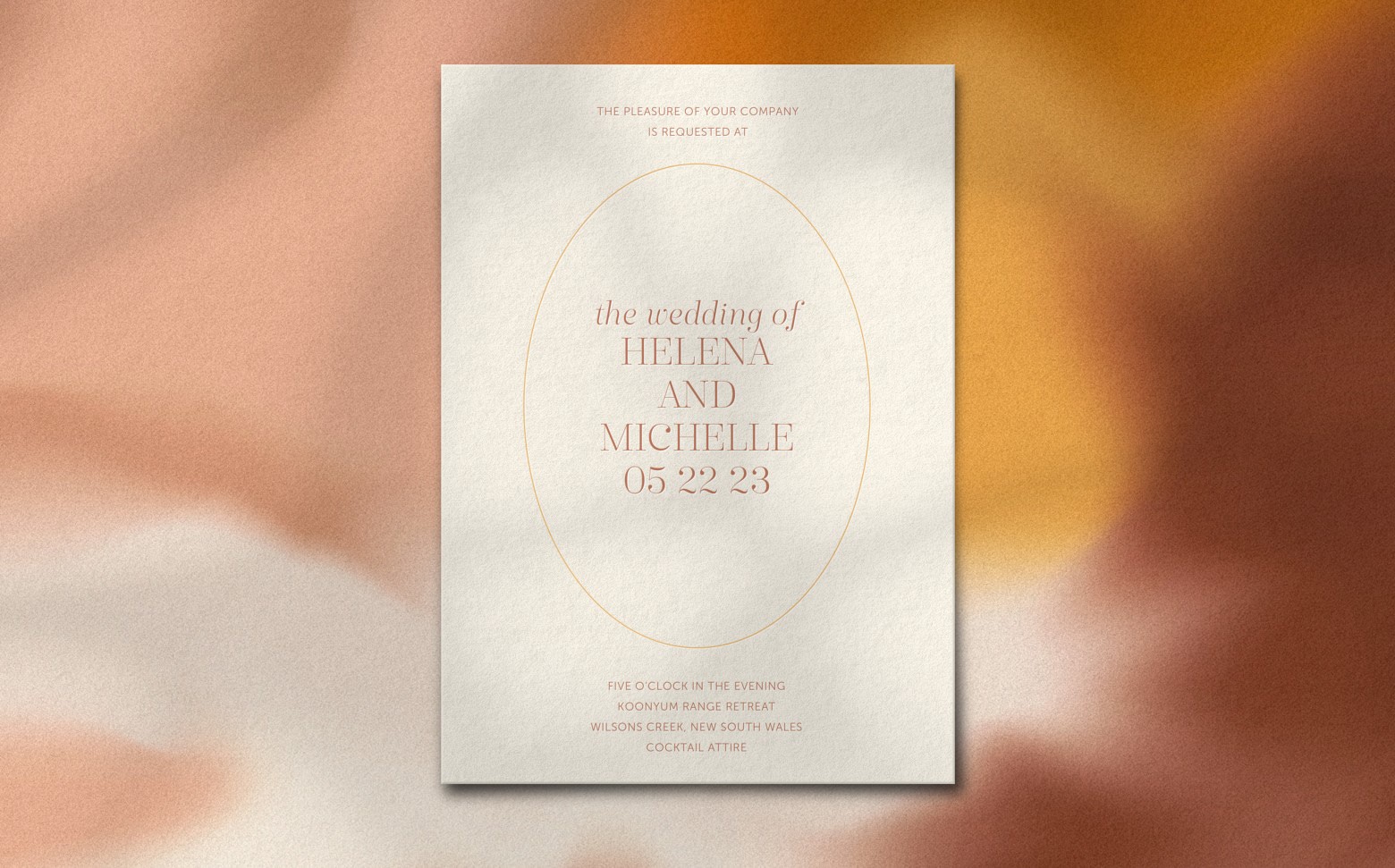
Digital invitations follow the same etiquette conventions as printed ones. The wording, host line, information hierarchy, and RSVP structure are identical — what changes is the delivery method and how guests respond.
Formality on a digital invitation is determined entirely by design and wording, not by the fact that it arrived in an inbox. A classic serif typeface, a white background, and formal host-line wording produces a formal invitation regardless of format. A brightly colored design with casual language produces a casual one. Format is neutral.
The practical difference is that digital invitations allow guests to RSVP directly through the invitation, eliminating the need for a physical reply card. Open tracking lets you see exactly who has viewed the invitation, which simplifies your follow-up list significantly. For couples weighing both options, most send both: a printed invitation for the primary guest experience and a digital version as a follow-up or for guests who prefer it.
Destination wedding invitations go out ten to twelve weeks before the wedding date, four weeks earlier than the standard eight-week rule for local weddings. Guests need more lead time to book flights, arrange accommodation, and request time off work. Save the dates for destination weddings go out six to twelve months in advance.
The invitation itself follows the same rules as a standard invitation: venue name and address, date, time, reception details, RSVP instructions. Travel and accommodation details belong on your wedding website, not the invitation card. Include the website URL prominently so guests know where to find everything they need to plan the trip.
If you're providing hotel blocks or coordinating group travel, note that on the website, not on the card. Destination wedding invitations should feel elevated, not logistical. The details live online.

Send printed invitations eight weeks before the wedding date. For destination weddings, or when most guests are traveling from out of town, send ten to twelve weeks out. The full timing breakdown, including save-the-date timing and what to do if you're not sending save-the-dates, is in the guide to when to send wedding invitations.
Wedding invitation wording follows a consistent structure: host line, couple's names, date and time, ceremony location, reception details, and RSVP instructions. The host line, which names who is hosting the wedding, accounts for most of the variation across families and scenarios. Ready-to-use examples across every hosting scenario, including traditional, both families, couple-hosted, and divorced parent configurations, are in the complete guide to wedding invitation wording.
No. Registry information never belongs on a wedding invitation. Direct guests to your wedding website for registry details. This applies universally: formal, casual, printed, and digital invitations alike.
Address the outer envelope to the parents only, using their names without listing children. This signals clearly that the invitation extends to the adults addressed. Never include a note requesting that guests leave children at home; this is considered discourteous on a formal invitation.
The outer envelope uses full names and formal titles. The inner envelope, if you're using one, uses first names and lists all guests including children. For the complete addressing guide covering married couples, same-sex couples, guests with different last names, military titles, and every other scenario, see how to address a wedding invitation.
Yes. Formality is determined by design and wording, not delivery format. Digital invitations are widely accepted for weddings at every formality level. Browse Bliss & Bone's printed wedding invitations and online wedding invitationsacross the same design collections to see both options side by side.
Set the RSVP deadline three to four weeks before the wedding date. If guests don't respond by the deadline, it's appropriate to follow up once by phone or text.