



Start Designing for Free!
By Bliss & Bone
May 2026
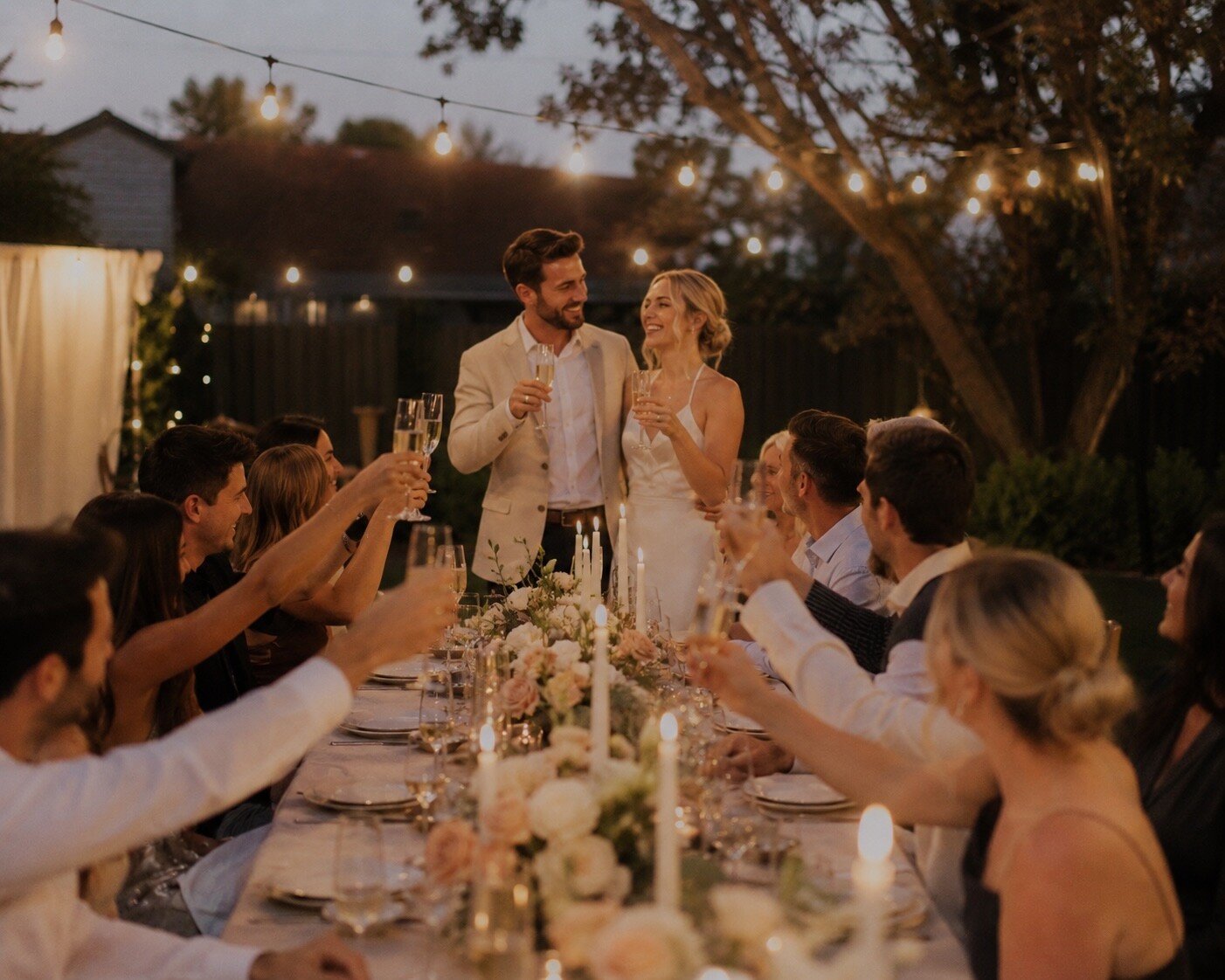
The engagement party is the first real event most couples plan after a proposal, and it sits in an odd spot: it is a genuine party with a guest list, a budget, a venue, and an invitation, yet most couples have never hosted one and aren't sure what it should look like. That uncertainty is why a search for engagement party ideas returns a flood of theme inspiration with almost no structure underneath it.
This guide is built around the decisions you will actually make, in the order you will make them: when to throw the party, who hosts and who pays, how many people to invite, where to host it, what to spend, what theme suits your scope, what food and drinks make sense, and what activities keep guests engaged. The theme inventory is here too, anchored to the constraints (backyard versus restaurant, 20 guests versus 80, $500 versus $5,000) that decide whether a theme actually works.
The short version, before the detail: most engagement parties happen two to four months after the proposal, host 25 to 50 guests, last two to four hours, and cost between $1,000 and $5,000. Everything else is a function of those four numbers.
An engagement party is the first formal celebration after a proposal, hosted to announce and toast the engagement in front of family and friends. It is optional. Plenty of couples skip it and go straight into wedding planning, and that is a completely normal choice.
When couples do host one, it serves three functions. It marks the engagement publicly and gives everyone a reason to celebrate together early. It introduces the two families and the separate friend groups who will spend the next year crossing paths, often for the first time. And it quietly opens the wedding-planning runway, the moment the relationship shifts from "we're engaged" to "we're planning a wedding."
Traditionally the bride's parents hosted the engagement party, and that convention still shows up in older etiquette guides. Today it is hosted by either set of parents, both sets jointly, the couple themselves, or a close friend or sibling, and none of those options reads as unusual. If you want to understand where the party falls in your wider timeline, our breakdown of average engagement length covers when most couples move from passive engagement into active planning.
Host your engagement party two to four months after the proposal. Anywhere from one to six months is normal, and a surprise party thrown by family within the first few weeks is increasingly common. The goal is to celebrate while the news is still fresh, before wedding logistics take over your calendar.
This timing maps cleanly onto how couples actually move through an engagement. The average engagement in the US is 15 months, but couples don't start planning right away. Bliss & Bone platform data across 15,000 weddings shows the median US couple begins building their wedding website 8.4 months before the wedding, which means roughly the first 6.6 months of a typical engagement are a passive phase: announcing, celebrating, and loosely scouting before any vendor gets booked. The engagement party belongs squarely in that passive window. As our planning team puts it, "the engagement party is a first-half event, not a back-half one. It loses its purpose the closer it drifts to the wedding."
Two edge cases are worth calling out. For short engagements under 12 months, host within the first month and keep it informal, because the planning runway is tight. For long engagements of 18 months or more, still throw the party in the first two to four months rather than waiting. A party held six weeks before the wedding stops being an engagement party and starts competing with the rehearsal dinner. As a rule, avoid scheduling it within two months of the wedding date for exactly that reason.
One seasonal note: December is by far the most concentrated proposal month, accounting for between 11.6% and 16.3% of Bliss & Bone signups depending on country. If you got engaged over the holidays, a late-winter or early-spring party puts you right in the standard window.
Whoever hosts the engagement party pays for it, and that can be either set of parents, both sets together, the couple, or a close friend or sibling. The old rule that the bride's parents host and pay still appears in etiquette guides from The Knot and BridalGuide, but it is now one option among several rather than the expectation. Joint hosting by both families has become especially common, in part because it doubles as the families' first real collaboration.
The money rule that trips couples up: if the party is at a restaurant or venue, the host covers the bill. Guests should never be asked to pay for their own meals or drinks at an engagement party. If the budget can't support a full venue tab, that is a signal to scale the format down (an at-home cocktail party, a brunch) rather than ask guests to chip in.
Two etiquette rules are effectively universal across The Knot, Zola, and BridalGuide, and worth stating plainly. First, anyone invited to the engagement party should also be invited to the wedding. Guests assume the two lists go together, so inviting someone to the party but not the wedding reliably causes hurt feelings. Second, registry information never goes on the engagement party invitation. Gifts are not expected at an engagement party, though many guests bring something small, and the right way to share registry details is through your wedding website, not the invite. Acknowledge any gift you do receive with a prompt handwritten note. For the broader rules that carry into the wedding itself, our wedding invitation etiquette guide covers the full set.
A typical engagement party hosts 25 to 50 guests. Some couples keep it to 10 or 15 with immediate family only, and some run past 100 for a big extended celebration, but the 25-to-50 band is the center of gravity.
The single most useful framing: the engagement party guest list is a subset of the wedding guest list, never its own separate list. The cleanest way to build it is to invite the people who would be genuinely hurt not to be there, your immediate families and closest friends, and stop there. If you are not sure where your wedding list stands yet, a wedding guest list template makes the overlap obvious and keeps you from over-inviting early.
This connects directly to the etiquette rule above. Because everyone at the party expects a wedding invitation, the party list functions as a public commitment. Keep it tighter than you think you need to, especially if your wedding will be small. It is far easier to expand a guest list later than to walk one back.
Most engagement parties cost between $1,000 and $5,000, and the single biggest variable is whether you pay for a venue. Here is how the ranges break down by scale, based on current US pricing.
An at-home casual party for 15 to 30 guests typically runs $300 to $1,500. With no venue fee, the spend goes to food, drinks, rentals, and a few decor pieces.
A restaurant private room for 20 to 50 guests runs about $1,000 to $4,000, usually structured as a food-and-beverage minimum rather than a flat rental fee.
A catered venue or larger backyard party for 50 to 100 guests lands between $2,500 and $8,000 once you add catering, rentals, and staff.
A formal hosted event for 100 or more guests starts around $5,000 and climbs past $15,000 as it approaches small-wedding scope.
On a per-guest basis, light refreshments run $15 to $25 a head, while fuller service with passed hors d'oeuvres and a real bar pushes $40 to $100. Open bar adds more than any other single line item. The headline takeaway: at-home and backyard parties cost three to five times less than a venue party at the same guest count, which is exactly why they remain the most common format.
If you want to keep the number down, the highest-leverage moves are hosting on a Sunday afternoon or a weeknight, serving hors d'oeuvres instead of a seated meal, offering one signature cocktail plus beer and wine instead of a full open bar, hosting at someone's home, and skipping favors. For couples who want to see the engagement party inside the bigger picture, a wedding budget template keeps this spend from quietly eating into the wedding fund.
The right venue is a function of guest count and budget more than style. Five formats cover almost every engagement party, from the cheapest to the most formal.
Hosting at home is the most common option, and for good reason: it is intimate, flexible, and by far the cheapest. It works best under about 40 guests, because above that, parking, bathrooms, and food flow start to break down. Nail three things and an at-home party runs smoothly: rented chairs and tables if you need them (roughly $200 to $400 for 30 guests), one clear path for food, drinks, and seating so the room doesn't bottleneck, and good lighting if it runs into the evening.
Backyard parties carry one extra requirement: a rain plan. A backup tent rental runs about $300 to $800, and the alternative is being ready to move everything indoors at the last minute. Decide which it is before you send invitations, not the morning of.
A restaurant with a private room is the second most common choice and the lowest-effort one. Most charge a food-and-beverage minimum (commonly $1,500 to $5,000 depending on the city and headcount) rather than a separate venue fee, and the restaurant handles food, service, and cleanup. You bring decor, a little signage, and a playlist if they allow it. This format is ideal for 15 to 40 guests and for couples who would rather celebrate than project-manage.
Booking a partial buyout or a reserved area at a bar, brewery, winery, or rooftop suits younger crowds and city weddings well. These venues usually work on a per-head food-and-drink minimum. The one caution: they are less comfortable if grandparents and older relatives make up a large share of your guest list, since the setting tends to skew loud and standing-room.
A dedicated event venue is the closest thing to small-wedding energy, and the right call for 50-plus guests or a more formal celebration. It also has the highest cost ceiling, because a venue rental of $1,000 to $5,000 sits on top of catering, rentals, and service. Most engagement parties don't need this. The exception is couples whose wedding will be intimate or destination-bound, who sometimes scale the engagement party up as the "everyone's invited" social version of the wedding.
A destination engagement party is increasingly normal for couples planning a destination wedding. The logic is simple: host the engagement party near home so the friends and family who can't travel to the wedding still get to celebrate with you in person. Destination weddings make up 33% of Bliss & Bone's couples, and a hometown engagement party is how many of them keep the people they love included.
A theme works best when it grows out of a real constraint, the season, the venue, or your actual taste, rather than being picked off a list. Choose the constraint first, then let the theme follow. Here is an organized inventory to pull from once you know your scope.
Spring: a garden party, a floral brunch, a citrus palette, or soft pastels. Spring rewards anything that gets people outside without committing to summer heat.
Summer: a backyard BBQ, a pool party, rooftop cocktails, a beach picnic, or a lakeside gathering. The most relaxed, lowest-formality season.
Fall: a harvest dinner, a vineyard or orchard outing, or autumn neutrals with heavy candlelight. Fall is the easiest season to make a party feel warm and intimate.
Winter: a holiday cocktail party, a cozy hot-cocoa bar, or New Year's Eve glamour. Since December is the single most concentrated proposal month, a winter party is also the most on-time option for a huge share of couples.
Elegant: all-white dress code, a black-tie cocktail format, or champagne and oysters. Best paired with a restaurant or venue.
Casual: backyard BBQ, taco night, a pizza party, or beer and burgers. The default for at-home parties and the easiest to execute well.
Boho: pampas grass, warm neutrals, candles, low seating, and a mezze or grazing table. Photographs beautifully and scales down to small budgets.
Modern minimalist: black and white, single-stem centerpieces, and clean modern signage. The least expensive aesthetic to pull off because it relies on restraint, not volume.
Travel or destination preview: if the wedding is in Italy, throw an Italian dinner; if it's in Mexico, do margaritas and small plates. It doubles as a soft preview of the wedding for guests.
Decade theme: 70s disco, 80s pop, or 90s nostalgia. This is also the lowest-competition keyword territory if you're hunting for something distinctive.
Cocktail party: the most common format. Two to three hours, passed or stationed hors d'oeuvres, and drinks. Easy to scale and easy to keep moving.
Brunch: rising fast in popularity. Lighter on alcohol, friendlier to older guests and kids, and usually cheaper.
Sit-down dinner: more formal and more intimate, best kept under 30 guests so the table conversation actually works.
Activity-based: bowling, ax throwing, a vineyard tour, or a cooking class. Especially useful for younger couples whose families haven't met, because the activity does the social work for you.
Good engagement party decor follows one rule: centerpiece, signage, lighting, and not much more. Three coordinated elements make a space feel intentional. A fourth and fifth competing element makes it feel cluttered. Pick your two or three colors before you buy a single object, then buy only what fits that palette.
The specifics that always work are low florals (kept under eight inches so guests can see across the table), taper candles, a welcome sign, a simple backdrop or photo wall, and table numbers if you're seating people. The smartest move is to choose decor that carries forward: signage with the couple's monogram or the wedding's typography can move from the engagement party to the bridal shower to the rehearsal dinner, which is also how couples start setting a consistent visual tone across every event.
What to skip: a balloon arch that competes with your florals, an oversized backdrop at a small party, and any monogrammed item you won't use again. Decoration is the one section where the SERP is dominated by Pinterest imagery, so the win here is structural advice, not another photo gallery.
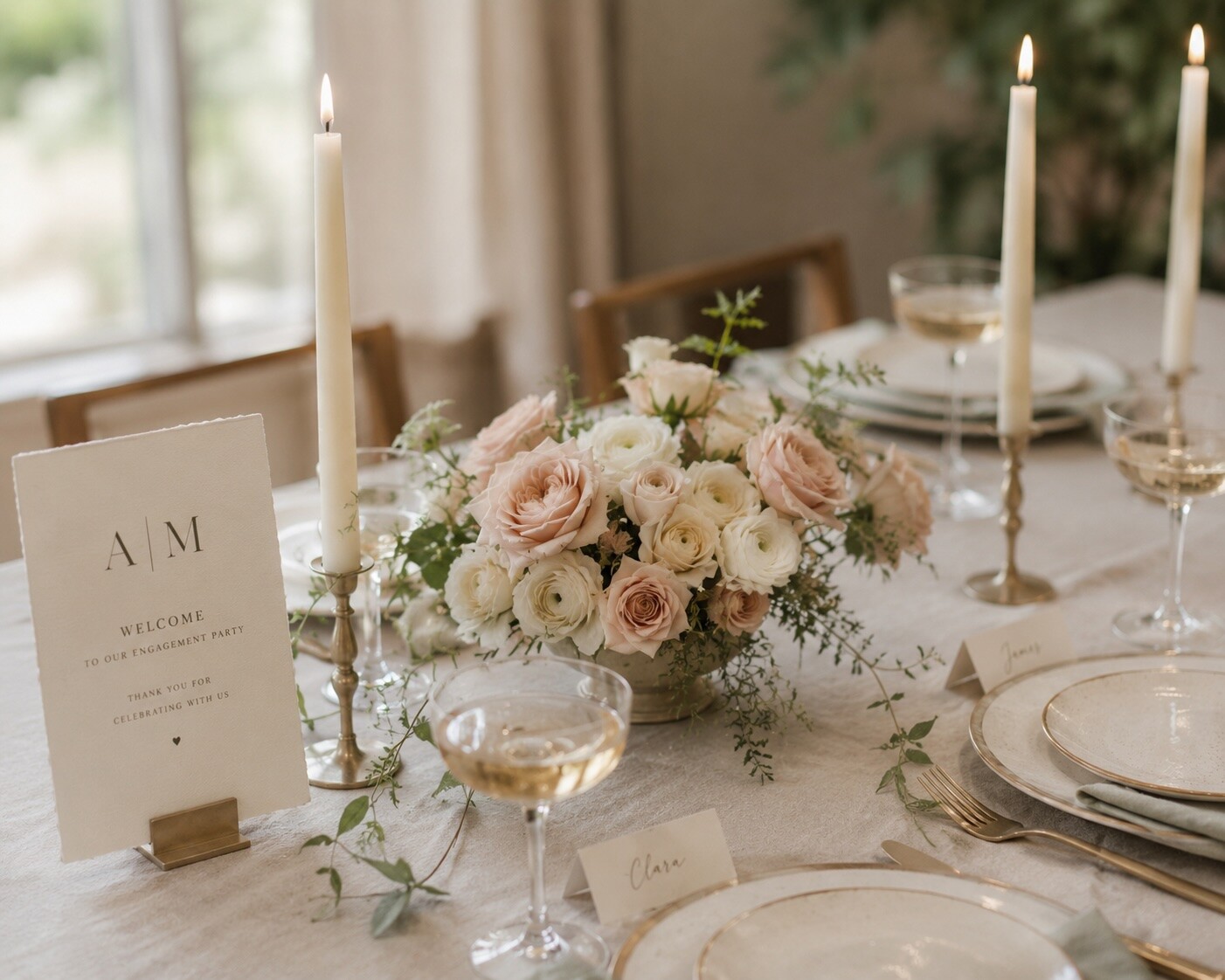
Match the food to the format, and keep the bar simple. For the cocktail party that most couples throw, plan four to six hors d'oeuvres (passed or stationed), one signature cocktail plus beer and wine, and a dessert. Budget roughly six to eight bites per guest for a two-hour party and ten to twelve bites for a three-hour party.
For a brunch, a stationed waffle or pancake bar or a quiche spread with fruit, pastries, mimosas, and a coffee bar keeps the bar cost low and works well with older guests and kids. For a casual backyard party, a taco bar, pizza, sliders, or ribs paired with beer, frozen cocktails, and lemonade does the job. For a sit-down dinner, a three-course plated meal, family-style, or a buffet all work, ideally for under 30 guests.
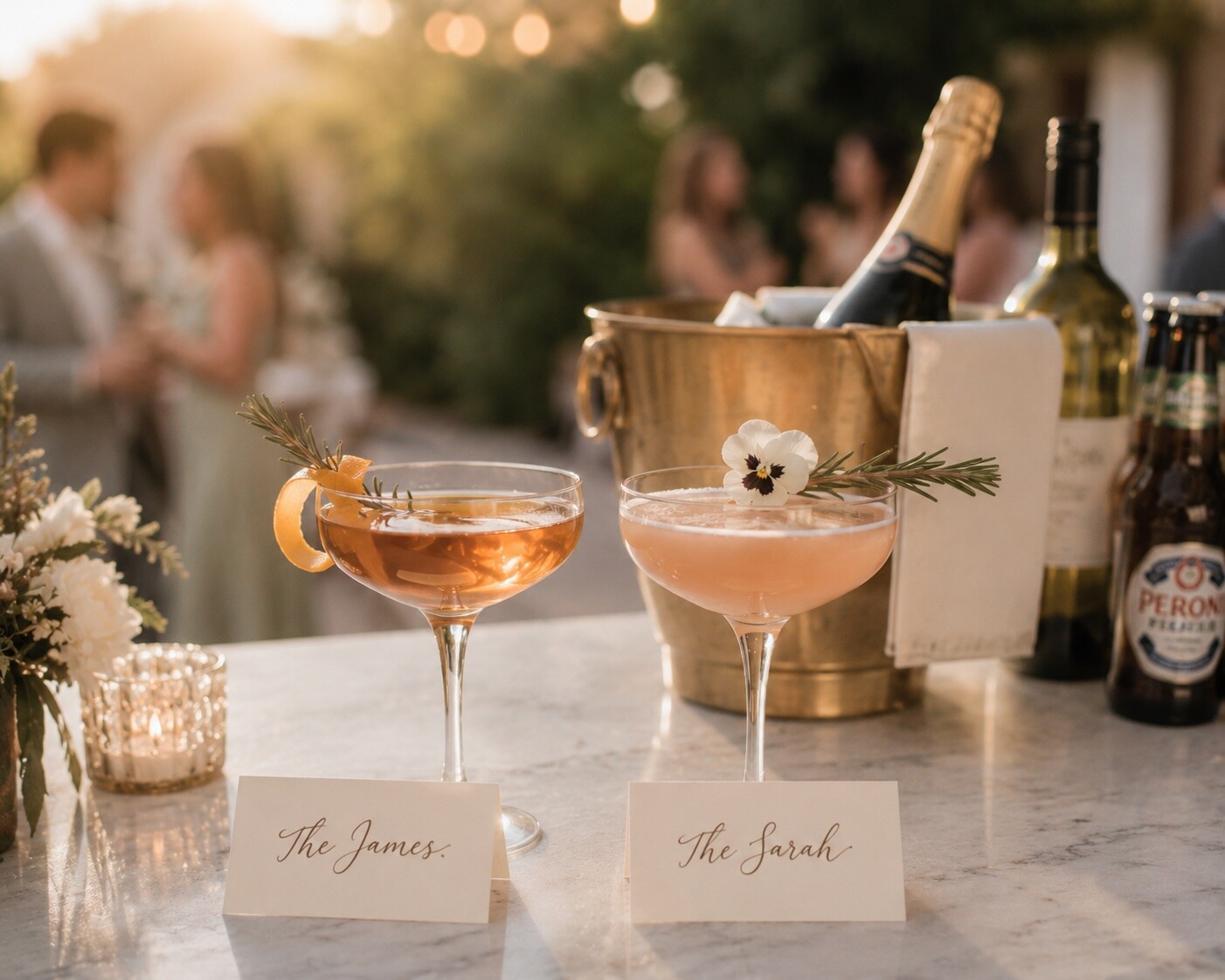
One idea worth stealing: name two signature cocktails after the couple ("The James" and "The Sarah") and let guests choose. It costs nothing and gets photographed every single time. The thing to skip is an elaborate full bar at a party heavy with grandparents and older relatives, because most of it goes untouched. Wine, beer, and one signature cocktail cover about 90% of preferences at any engagement party.
Most guests at an engagement party don't know each other, and that is the real problem games solve. They turn a room of strangers from two families and three friend groups into people who have actually talked. Choose one or two games for a party under 30, two or three for a party of 30 to 60. More than three and it stops feeling like a party and starts feeling like a shower.
Two Truths and a Lie about the couple: the host reads three "facts" about the couple and guests vote on the lie. It works because the whole room learns something about the couple at the same moment.
He Said / She Said: statements about the couple's habits and preferences, with guests guessing who said what. This is the single most reliable engagement party game, because it scales to any size and needs no setup.
Find the Guest (engagement bingo): bingo cards filled with attributes ("met the couple at college," "knows them from work"), where guests have to mingle to complete a card. It forces the exact cross-group conversation the party exists to create.
The Newlywed Game: the couple sits back-to-back and answers questions about each other on whiteboards. Ten to fifteen questions is the right length before it drags.
How well do you know the couple? trivia: ten to fifteen questions, played in teams and scored. Easy to write, easy to run.
Love-story timeline: print key dates from the relationship out of order and have guests put them in sequence. Quiet, sweet, and good for an older crowd.
A photo or polaroid station with prompt cards. The higher-end version is a rented photo booth ($500 to $900). The lower-end version is a few printed signs and a box of props.
Advice cards instead of a guest book: "What's your best marriage advice?" or "Predict their first-dance song." The couple reads them later, and they double as a keepsake.
A cocktail-naming contest: guests submit names for a drink, and the couple picks one to serve at the wedding. It connects the two events and costs nothing.
What to skip: Pin the Ring on the Bride (too juvenile for most adult parties), anything that makes guests sit silently for more than five minutes, and couple-themed Mad Libs, which are funny for about 90 seconds and then die.
Send engagement party invitations four to six weeks ahead for a party of 30 or more, and three to four weeks ahead for something smaller. For any guest who has to travel, send earlier. A month is the realistic floor for any party.
Every invitation needs the host's name (this is how guests know who is throwing it, which matters for etiquette), the date, time, and location, the dress code, and an RSVP method with a deadline. Dress code is the detail guests ask about most, so always include it even when the answer is "come as you are." The one thing the invitation must never include is registry information, the same rule that applies to wedding invitations.
Digital invitations are now standard for engagement parties, even among couples who will send printed invitations for the wedding itself. The smart play is to use the same designer and aesthetic for the engagement invite as for the eventual wedding suite, so the visual language of the wedding starts here. Every online wedding invitation on Bliss & Bone can be edited as an engagement party invitation in a few minutes, which lets the same design carry from your first announcement through the wedding day. If the engagement party is doubling as a kickoff for the whole weekend, the same is true of our rehearsal dinner and event invitations.
Favors are optional, and most engagement parties now skip them. Guests don't expect them, and the trinkets that end up in a drawer aren't worth the spend. If you do want them, two categories actually get used.
Edible favors (mini champagne bottles, cookies, jam, local honey) are the most popular because they get consumed instead of discarded. Functional favors (custom matchbooks, small candles, koozies) get used long after the party. Skip anything purely decorative, and remember that plant-based favors only work if guests drove rather than flew. Budget $3 to $10 per favor if you include them at all.
An engagement party should last two to four hours. A cocktail party runs two to three hours, a brunch two to three, a sit-down dinner three to four, and an activity-based party two to three hours plus the activity itself. The two-to-four-hour window is long enough for everyone to mingle, eat, and toast, and short enough that the energy never sags.
No competitor offers a real timeline, which is exactly why one is worth including. Here is the full runway, working backward from the party. For the version that covers the entire wedding, our wedding planning checklist picks up where this leaves off.
Eight weeks out. Set the date, confirm who is hosting, set the budget, and draft the guest list from your wedding list.
Six weeks out. Book the venue or confirm the home setup, lock in the caterer or restaurant, and send save-the-dates if the party is large or travel-heavy.
Four weeks out. Send the invitations, finalize the menu and bar, and order decor and signage.
Two weeks out. Chase down RSVPs, confirm any rentals, and place food orders.
One week out. Give the final headcount to your caterer, buy backup wine and beer, and print any signage.
Day of. Set up two hours before guests arrive, greet the first few people yourself so the room warms up, and assign one person to take photos. The most common regret couples report is having no candid pictures from their own engagement party. Formal engagement photos are a separate shoot most couples book around this same window, and our guide to what to wear for engagement photos covers the outfit side.
An engagement party is the first formal celebration after a proposal, hosted to announce and toast the engagement with family and friends. It is optional, and many couples skip it. When it happens, it usually serves to introduce the two families, gather everyone early, and mark the start of wedding planning.
Host an engagement party two to four months after the proposal, though anywhere from one to six months is normal. The point is to celebrate while the news is fresh and before wedding logistics take over. Avoid scheduling it within two months of the wedding, since it then competes with the rehearsal dinner.
The engagement party can be hosted by either set of parents, both sets jointly, the couple themselves, or a close friend or sibling. Traditionally the bride's parents hosted, but that is now one option among several rather than the rule. Whoever hosts also pays.
Whoever hosts the engagement party pays for it. If it is held at a restaurant or venue, the host covers the bill, and guests are never asked to pay for their own meals or drinks. If the budget is tight, scale the format down to an at-home party or a brunch rather than asking guests to contribute.
Most engagement parties host 25 to 50 guests, though some stay under 15 with immediate family only. The guest list should be a subset of the wedding list, not a separate list. Because everyone invited to the party expects a wedding invitation, keep it to the people who would be genuinely hurt to be left out.
At an engagement party, guests mingle, eat, drink, and toast the couple, usually over two to four hours. A short toast from the host or a parent is customary, and one or two icebreaker games help when the two families haven't met. There is no required program, which is part of why the party is so flexible.
An engagement party typically lasts two to four hours. A cocktail party runs two to three hours and a dinner three to four. That window gives everyone time to mingle and toast without the energy fading.
An engagement party usually costs between $1,000 and $5,000, with the venue being the biggest variable. An at-home party for 15 to 30 guests can run as little as $300 to $1,500, while a catered venue party for 50 to 100 guests runs $2,500 to $8,000. Per guest, expect $15 to $25 for light refreshments and $40 to $100 for fuller food and bar service.
Gifts are not expected at an engagement party, though many guests bring something small like wine, a candle, or a keepsake. Registry information should never appear on the engagement party invitation, so guests who want to give a gift choose for themselves. Acknowledge any gift with a prompt handwritten note.
No. An engagement party is a co-ed celebration that toasts the engagement, where gifts are not expected and both partners attend. A bridal shower comes later, is gift-focused, and traditionally centers on one partner. For the rules around showers and gifting, see our wedding shower etiquette guide.
Whatever you decide, the engagement party is where your wedding's visual language starts, often with the very first piece of stationery you send. Every save the date and invitation on Bliss & Bone is built to carry one consistent design from your engagement party through the wedding day.