Start Designing for Free!
By Bliss & Bone
March 2026
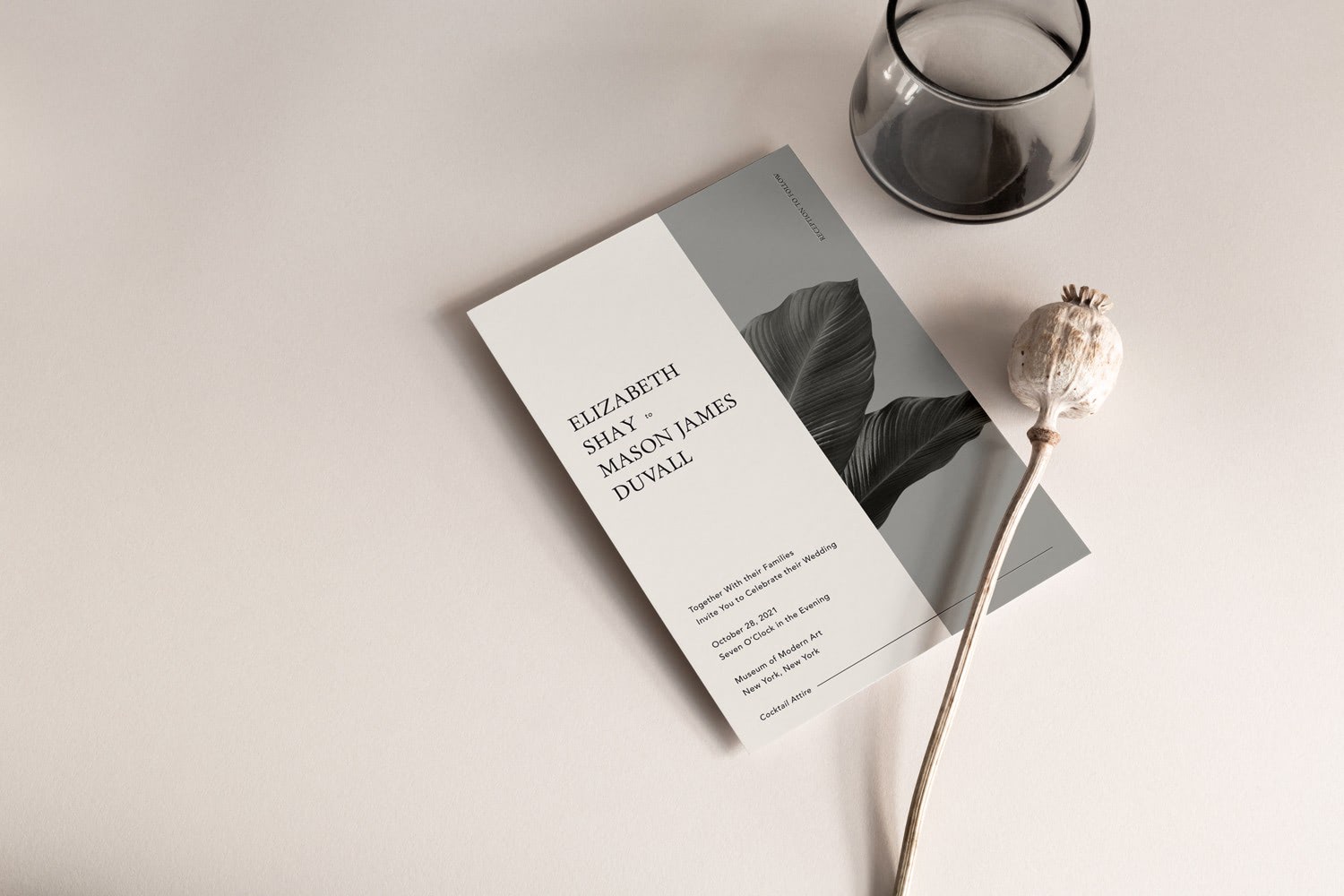
The best wedding invitation ideas start with one decision: does the design reflect your wedding's tone? From there, the choices branch out — format (printed or digital), style, color palette, font, and wording. This guide covers each decision in sequence, with etiquette rules and links to browse specific styles on Bliss & Bone.
Your venue is usually the best starting point. A barn or estate calls for a different aesthetic than a hotel ballroom or beach resort, and invitations that echo the setting feel deliberate rather than generic. Beyond the venue, look at the season. Spring and summer weddings tend toward florals, watercolor, and lighter palettes; fall and winter lean into deeper colors, heavier papers, and more formal typography. If you're shooting engagement photos first, coordinating your outfits to that same seasonal palette keeps your save-the-dates and invitations visually consistent.
Invitations you've received from friends in the past few years are an underrated reference point — they show how a design reads in actual hands, not just on a screen. Bring the ones you've saved to your design session. If you're starting from scratch, browse Bliss & Bone's invitation collections to find a direction quickly, with styles spanning minimalist to maximalist.
The format decision comes down to four factors: budget, timeline, guest demographics, and formality.
Printed wedding invitations are the traditional choice and remain preferred for black-tie, formal, and vintage-themed weddings. They require more lead time — plan for at least three to four weeks of production after design approval — and cost more per invite, particularly for premium paper stocks, letterpress, or foil finishes.
Digital wedding invitations run around $1 per invite, can be designed and sent the same day, and link directly to your wedding website for RSVPs, directions, and registry details. For couples with guests who are comfortable with digital communication, they're practical without sacrificing design quality.
Most couples land somewhere in between: digital for the majority of guests, printed for immediate family and close friends who prefer something tangible. Neither format is wrong; the question is which matches your priorities.
Your wedding theme is the single biggest driver of invitation design. It determines color palette, typography, paper weight, and illustration style. The most popular categories:
Minimalist Clean typography, generous white space, one or two colors at most. Black and white is the classic execution; warm ivory with a single serif font is another. Browse minimalist wedding invitations and black and white wedding invitations for examples.
Botanical and floral The most consistently popular category. Ranges from delicate watercolor florals for spring weddings to dramatic tropical leaves for destination events. See floral wedding invitations, botanical wedding invitations, and greenery wedding invitations.
Vintage Art Deco flourishes, 1920s Gatsby aesthetics, Victorian ornamentation. Usually features ornate borders, serif or script fonts, and muted palettes. Explore vintage wedding invitations.
Boho Warm earthy tones, dried botanicals, relaxed handwritten or script fonts. Suits outdoor and rustic venues especially well. Pairs naturally with a boho save the date for a cohesive suite.
Romantic Soft palettes, elegant typography, and designs that feel intimate rather than formal. See romantic wedding invitations.
Coastal and tropical Fresh blues, sandy neutrals, and lush greenery for waterfront and destination weddings. Browse tropical wedding invitations and destination wedding invitations.
Modern and architectural Geometric shapes, bold sans-serif typography, high-contrast palettes. The font and layout do most of the work. Browse modern wedding invitations.
Garden and spring Light, fresh, and color-forward. Works especially well for outdoor daytime ceremonies. See garden wedding invitations and spring wedding invitations.
Luxury and letterpress For couples who want maximum tactile impact. Letterpress adds depth and texture that photographs beautifully; foil finishes catch light in ways digital prints cannot. Browse letterpress wedding invitations and luxury wedding invitations.
Whimsical and creative Unexpected illustrations, playful layouts, and designs that break convention deliberately. See whimsical wedding invitations and creative wedding invitations.
Mountain Rustic and nature-forward, with pine, wood textures, and earthy neutrals. Browse mountain wedding invitations.
Desert Warm terracotta, dusty rose, and botanical elements like cacti and desert blooms. Popular for Palm Springs, Sedona, and Southwest desert settings.
Coquette Delicate bows, pearl accents, soft pinks, and romantic flourishes. One of the stronger emerging aesthetics of the last two years.
Whatever direction you choose, matching your invitations to your save the dates creates a cohesive stationery suite across the full timeline.
Color is often the first design decision couples lock in, and it should drive everything else. Paper stock, envelope liner, and font all read differently depending on the base palette.
Gold Works as an accent across nearly any base. Gold foil on wording or borders adds formality to ivory, deepens navy, and warms up blush. Browse gold wedding invitations.
Ivory, champagne, and white Soft neutrals that read as romantic and ethereal. Easy to coordinate across a full stationery suite. See white wedding invitations.
Navy and dark blue Perennially sophisticated. Pairs with gold accents for a formal look, or crisp white for something cleaner and more modern.
Blush and light pink Romantic and versatile. Rose gold foil adds warmth; pairing with ivory keeps it from reading as too sweet.
Green Both sage and deep forest green have been consistently popular. Pairs naturally with botanical and floral illustration styles.
Black High-contrast and dramatic. Black wedding invitations work especially well for modern, minimalist, or formal evening weddings.
Burgundy and wine Rich and moody, and one of the strongest fall and winter palette choices. Pairs beautifully with gold or copper accents.
Terracotta Warm and earthy. A signature color for boho and desert weddings, working especially well on kraft or off-white paper stocks.
Lavender Soft and romantic without leaning pink. A rising alternative to blush for spring and garden weddings.
Your color palette should extend to your save the dates. Browse black and white save the dates and formal save the datesto see how color carries across the full suite.

Font choice is one of the most underrated invitation decisions. The right wedding invitation font sets tone immediately, before a guest reads a single word.
The four main categories: Serif (Garamond, Times New Roman) works well for formal, vintage, and traditional weddings; the small strokes add visual weight and historical character. Sans serif (Montserrat, Arial) is the modern-minimalist choice, clean and particularly effective for graphic or architectural designs. Script and calligraphy suits formal and romantic aesthetics and is elegant but harder to read at small sizes, so reserve these for names and headlines rather than body text. Handwritten styles are casual, warm, and approachable — a strong fit for garden parties, boho weddings, or any celebration that wants to feel personal rather than polished.
Most strong invitation designs pair two fonts: one for the headline (couple's names, event title) and one for the body (date, time, venue, RSVP details). A script headline paired with a clean serif body is the most common combination. For a different kind of contrast, try pairing a bold serif for the names against a lightweight sans serif for the details.
Design gets the attention, but wording is what guests actually read. Every invitation needs six core elements: host line, couple's names, date, time, venue (name and address), and RSVP instructions. For more on phrasing and formality, see our full guides on wedding invitation etiquette and unique wedding invitation wording.
Common wording formats:
Formal, hosted by one family: "Mr. and Mrs. Wilder request the pleasure of your company at the wedding of Gregory and Angela — Saturday, the fourteenth of June — The Grand Hall, Chicago."
Hosted by both families: "Together with their families, Jason and Melissa invite you to celebrate their marriage — May 25 — Flores Estate, Austin."
Couple hosting, casual tone: "Jessica and Cameron invite you to join them as they tie the knot — September 9, 3 in the afternoon — Prospect Park Boathouse, Brooklyn."
The main etiquette rules: use "request the honor of your presence" for ceremonies in a house of worship; "request the pleasure of your company" for civil and non-religious ceremonies. On formal invitations, spell out dates and times in full. Whether to use full names and titles, how casual the tone can be, and whether to lead with the couple's names or the hosts' — those decisions depend on your family's preferences and the formality of the event.
Addressing is worth getting right; guests notice when it's done poorly.
Individual guest, no plus one Full name and title only. The absence of "and Guest" signals clearly that they're attending solo.
Guest with a plus one If you know the name, list both in full. If not, "[Name] and Guest" is the accepted format.
Unmarried couples living together List both full names and titles, send to their shared address.
Married couples List both names. When in doubt, write each name separately rather than defaulting to the husband's name only.
Families with children under 18 One invitation addressed to the whole family: "The Smith Family" or "Mr. and Mrs. John Smith, Adam and Claire."
Families with adult children (18+) Each adult child receives a separate invitation, even if they still live at home.
Guests with distinguished titles Doctors, judges, and military personnel should be listed with their full title. In a couple, lead with the higher title.
For a complete breakdown of every addressing scenario, see the full guide on how to address a wedding invitation. For RSVP collection, route guests directly through your wedding website.
Send save the dates six to nine months before the wedding — earlier for destination weddings or peak-season dates. Invitations follow eight to ten weeks before the ceremony, giving guests enough time to book travel and arrange coverage at work. Your wedding website should be live before save the dates land, so guests have somewhere to check details and RSVP immediately.
According to wedding planning surveys, couples who send invitations in the eight-to-ten-week window see RSVP response rates roughly 20–30% higher than those who send at four weeks. Guests who receive more lead time are more likely to respond promptly.
For a full breakdown of timing and what to include at each stage, see when to send wedding invitations and save the date etiquette.
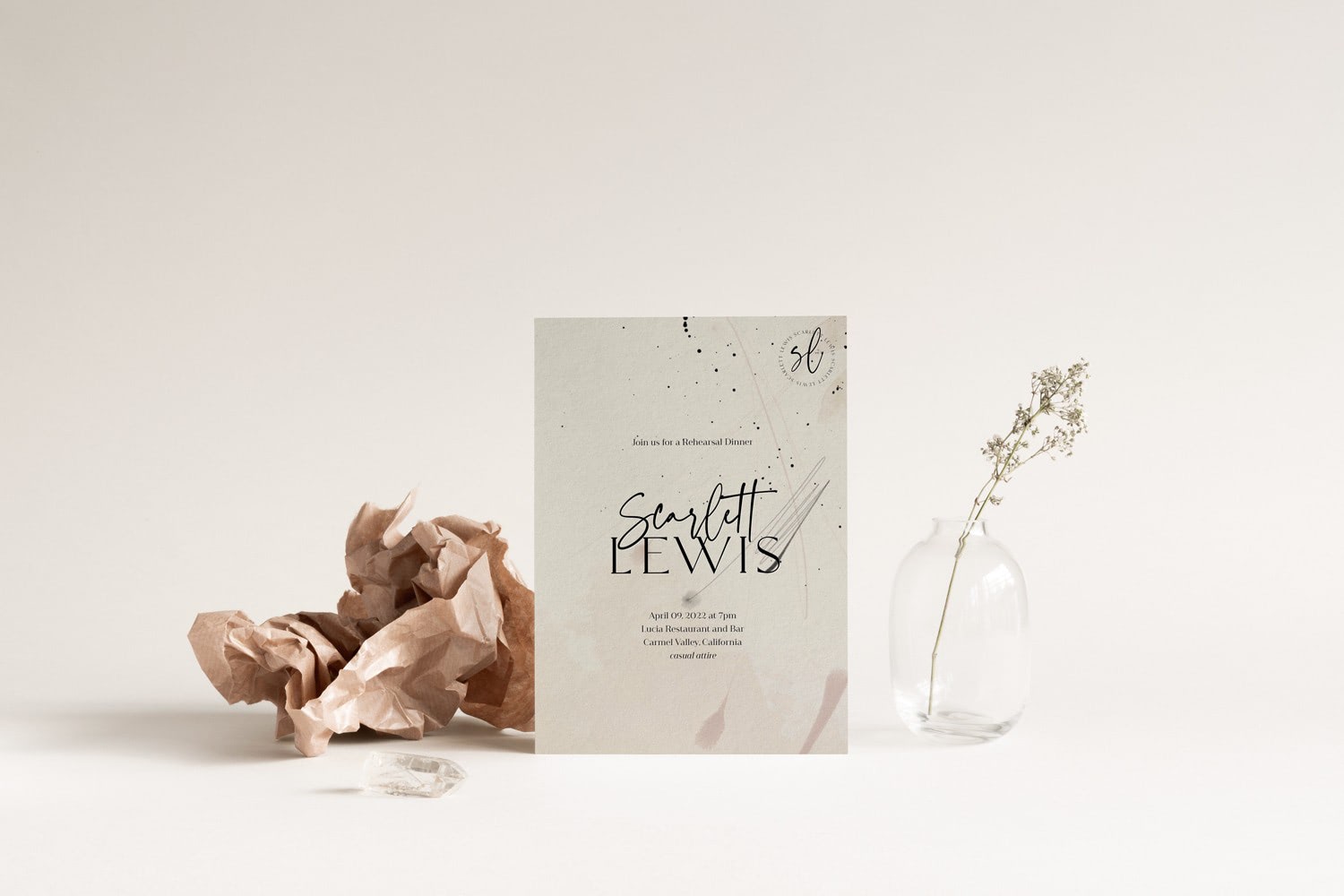
Your invitation is the centerpiece of a stationery suite that spans the full wedding timeline. Save the dates go out first and set the visual tone. Rehearsal dinner invitations follow, typically two to three weeks before the wedding. Wedding menusare placed at each reception seat on the day.
One element that ties everything together particularly well is a wedding logo or monogram. Built from your names or initials, it can appear on the invitation, website, menu, and signage without the design becoming repetitive. A custom wedding monogram is especially effective on printed suites where the mark is embossed or foil-stamped as a recurring motif.
Before committing to a printed design, order wedding paper samples to feel the stock options in hand. Weight, texture, and finish read very differently in person than on screen.
Send invitations eight to ten weeks before the ceremony. For destination weddings or dates around major holidays, twelve weeks is safer. Save the dates go out earlier — six to nine months ahead — to give guests time to arrange travel and accommodation before the official invitation arrives.
Printed invitations are physical, mailed stationery preferred for formal and black-tie weddings. Digital invitations are sent by email or link, cost around $1 per invite, and connect directly to your wedding website for RSVPs. Most couples choose digital for the majority of guests and printed for immediate family or those who prefer something to keep.
Digital wedding invitations run roughly $1 per invite with no printing or postage costs. Printed invitations range from $2–$5 per suite for standard digital printing to $8–$15 or more for letterpress, foil, or premium paper options, before postage. Budget for postage separately; heavier paper stocks, wax seals, or multi-insert suites may require additional postage.
Six required elements: the host line, couple's names, date and day of the week, ceremony time, venue name and full address, and RSVP instructions. Optional additions include dress code, wedding website URL, accommodation details, and reception address if different from the ceremony location.
Not necessarily. Many couples skip the physical RSVP card in favor of online RSVPs through their wedding website, which simplifies tracking and eliminates the cost of printing and return postage. If your guest list includes guests less comfortable with online RSVPs, a physical card is worth the additional cost.
Browse Bliss & Bone's full collection of printed and digital invitations by style using the links throughout this guide, or start with wedding paper samples if you're considering a printed suite and want to feel the stock options before you commit.